|
|
April marked the final show of the season, which was the BBKA Spring Convention, and it was a great success. It was lovely to have Simon from HiveKeepers over from Australia, and the team from Apitura, on our stand with us. We would also like to thank our Thorne staff for all their hard work over the show season. Now we are ready for the beekeeping season to fully kick off! |
|
|
|
|
Please note that all of our branches will be closed on both Bank Holiday Mondays this May. |
If you are local to Lincolnshire, we still have a few spaces left on our courses. We have "Next Steps" on Wednesday 21st May and "Beginners" on Friday 8th May, Friday 15th May or Saturday 16th May. Follow the link below to read more about these, and other courses available, and book. |
|
|
|
|
|
|
|
The Leslie Thorne Award is an annual prize presented by the Lincolnshire Beekeepers Association (LBKA) and the Thorne family to support young beekeepers. |
|
|
|
|
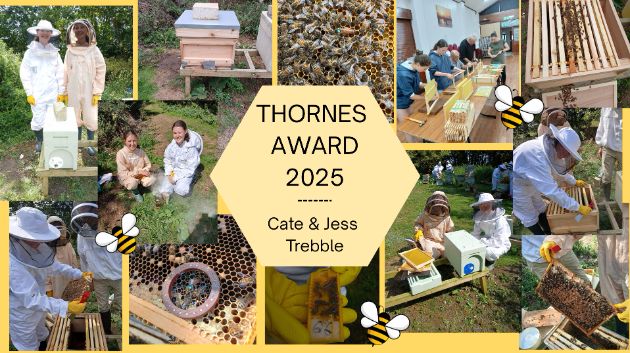
Cate and Jess Trebble received the award last year and recently gave a presentation about their first year of beekeeping (the highs and the lows!) at the LBKA Annual General Meeting. We were thrilled to hear about their plans to continue beekeeping and learning, including taking the Basic Assessment later this year. |
Cate and Jess Trebble, recipients of the Leslie Thorne Award (2025) |
|
|
|
|
|
|
|
Available in all sizes
Priced from £57.60 £51.84 |
| |
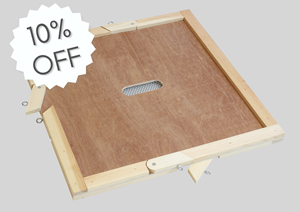
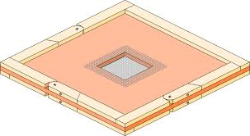
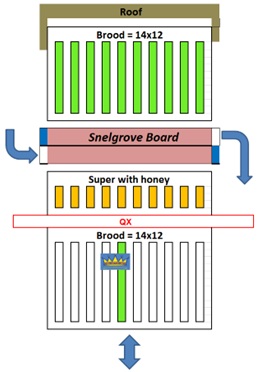
A Snelgrove board is a wooden hive management tool invented by Leonard Snelgrove in 1934, featuring a central double screen and multiple adjustable entrance gates on three sides. It is used to control or prevent swarms by splitting a colony vertically into two, allowing bees to be "bled" from one section to another to manage population balance and reduce congestion. |
|
|
|
|
Check out the article below, that goes more into the use of the Snelgrove board. |
|
|
|
|
|
Swarm Control and the Use of the Snelgrove Board |
Swarming is the honeybee’s vital means of ensuring the survival of the species. However, for the beekeeper it can mean a significant loss of bees and the subsequent drop in honey production. |
To prevent the loss and hassle associated with this natural phenomenon, various methods have been developed over the years to manage or reduced swarming. This article describes two that use a Snelgrove board to control the movement of bees and the suppression of swarming behaviour. |
Louis Edward Snelgrove, President of the British Beekeepers Association in 1956 and author of the book, Swarm Prevention and Control (1934 - still published today) was influential in educating the beekeeping world that there is a key factor that triggers swarming; namely, the presence of excess nurse bees. That is, when there is a surplus of nurse bees to the requirements of tending the brood, swarming, if other conditions are right, will be induced. |
Snelgrove went on to reason that, if by some simple means, the nurse bees and field bees could be separated from each other, the swarming impulse would not develop. This proved to be the case. |
There are now many methods of swarm control but all of them are based on the principle that if you separate either the queen, the brood or the field bees from the other two the swarming instinct is supressed. |
|
|
|
|
Using the Snelgrove Board |
Snelgrove developed methods of swarm control that use an ingeniously designed double entrance board (commonly known as a Snelgrove board). By opening and closing a series of paired doors the beekeeper separates the flying bees from either the queen or the brood whilst maintaining the bees in the same hive structure. This separation is the vital factor in suppressing the swarm behaviour. |
| |
|
|
|
One of the big advantages of using the Snelgrove board is that it enables the beekeeper to do the operation under one roof. This economises on equipment – one stand, one floor, one queen excluder and one cover board. |
Several ways of using his board are described by Snelgrove but they all involve splitting the colony and continually bleeding young bees from the top brood box through the opening and closing of a series of entrances. |
Method I - Pre-emptive Split |
Snelgrove’s first method involves the following procedure for swarm control, and its success is dependent on there being no swarm cells in the brood chamber: |
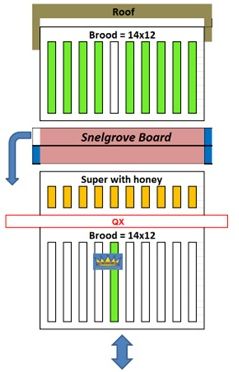
Day 1) Find the queen and place her in a brood body on a frame of brood. Add frames of drawn comb or foundation, which provides the queen plenty of egg laying space. This becomes the bottom box. Add a queen excluder, then supers and, on the top, another brood body containing all the remaining brood from the original brood body. |
Day 4) Place the Snelgrove board under the top box (the side with no entrances goes at the front of the hive). From the perspective of looking from behind the hive, open the top left entrance. Bees that have learnt to fly before will exit from this door but will return to the entrance at the front of the hive with which they are familiar. |
In a matter of days, the flying bees will have left the top box and will have returned to the stock below through the main entrance. In the top box, the bees, although in contact with the stock below through a wire mesh in the board, will consider themselves queen-less and will start producing queen cells. |
Day 7) By day seven, many nurse bees will have been ‘promoted’ to flying duties. These new flying bees will recognise the top left door as the entrance to their hive. To move them to the lower box, close the open entrance and then open the one underneath this (bottom left) which provides access to the stock of bees below. In addition, open the top right entrance. The flying bees leave by this latter opening and when they return to the entrance with which they are familiar they find it is blocked. Instead, they enter through the bottom one, which leads them away from their brood box to the stock below. |
Day 14) By day fourteen more nurse bees will have assumed flying duties. These new flying bees will recognise the top right door as the entrance to their hive. To move them to the lower box, close the open entrance and then open the one underneath this (bottom right) which provides access to the stock of bees below. |
In addition, open the top back entrance. The flying bees leave by this latter opening and when they return to the entrance with which they are familiar they find it is blocked. Instead, they enter the bottom one which leads them, (you’ve guessed it) away from their brood box to the stock below. |
In this way, the field bees are continually diminished in the top box and increased in the bottom box. |
Although in one hive structure, the bees in the upper box will attempt to raise a new queen. If the raising of a new queen is not the desired outcome, the beekeeper can knock down these cells. |
Depending on their goal, a beekeeper can manage the colony to reunite it, replace queens or use the upper box as a nucleus colony. |
|
|
|
| |
|
Method II - When Queen Cells are Present |
If, on inspecting the hive, queen cells have been discovered Snelgrove suggested an alternative method to control swarming using his board. This second method involves placing the queen in the top box together with most of the brood and placing a frame of capped brood in the bottom box together with frames of foundation or drawn comb. The Snelgrove board is placed under the top box. The sequence of opening and closing the entrances is different to the method described above but the principle of bleeding field bees into the lower box is the same. The separation of the flying bees from the queen tends to lead the bees to destroy the queen cells in the top box. |
The Snelgrove board is an ingenious device that can be used in different ways to separate the flying bees from either the queen or the brood, which acts to suppress the instinct to swarm. However, a one-time manipulation using the board may not prevent the bees swarming later in the season. Regular inspections are required. It is also advised to have young queens that are strong layers in the colonies and to provide space for the building of new comb as these factors are also recognised to reduce the tendency to swarm. |
|
|
|
|
|
|
| |
|
For most of April, we have had sunny skies and very little rain but also persistent cold winds and chilly nights, which has kept colony development slower than we would normally see at this time of year. Only in the last few days of April did it finally begin to feel like spring. The calendar and the weather don't always agree, and our bees know it! |
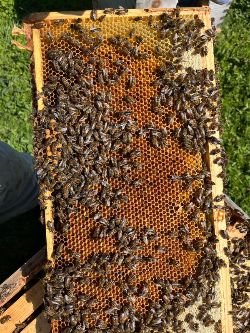
There's plenty of brood in the hives, which is reassuring, but build-up has been steady rather than the normal explosion we would see at this time of year. Given the cold nights and frequent wind, it makes sense. On the flip side, stores are minimal across most colonies, with the bees putting energy into brood rearing rather than building up honey stores, so we've been keeping a close eye to make sure nobody is caught short without any food. That said, pollen is coming in well on the better days, as you can see on this frame. With Oil seed rape and field beans both in flower close by, this is probably where they are getting their pollen from. |
| |
|
|
|
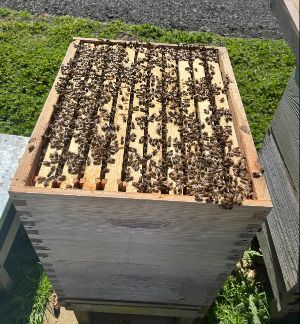
The bees are beginning to move up into the top brood boxes in our double-brooded colonies, which is a positive sign. It has been slow going, though; getting bees to draw wax freely onto new frames has been surprisingly difficult this spring, perhaps a reflection of the cold. Interestingly, our 14x12 and Langstroth colonies have come on best so far and seem to be drawing out new comb ahead of the others. |
We've made a start on the first nucs of the year, though progress has been slower than we'd like for the same reason — the reluctance to draw fresh wax means getting bees established on new frames takes a little more patience right now. We can't push things faster than the bees are willing to go! |
|
|
|
|
The first signs of swarm preparation are appearing with queen cells being started in some colonies — though nobody has actually swarmed yet. With stores low and build-up steady, conditions haven't been ideal for swarming, but April is always the month to start paying close attention, so inspections are well underway. |
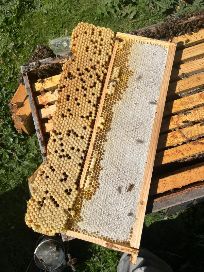
As part of our ongoing varroa management strategy, we've been carrying out drone culling this month. Varroa mites preferentially infest drone brood, so removing capped drone comb before the mites complete their reproductive cycle is a simple but effective tool in keeping mite levels in lower without the overuse of chemicals. It's a satisfying job that ticks both the colony management and IPM boxes at once. |
| |
|
|
|
As we head into May, warmer temperatures should finally kickstart the season properly. We're expecting the pace to pick up considerably — more nucs, more swarm management, and hopefully a proper honey flow at last. |
|
|
|
|
|
|
|
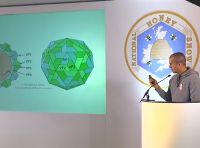
The lecture video release on the first Friday in May, was Humberto Boncristiani’s “Honey Bee Viruses”. Dr. Humberto Boncristiani is a second-generation beekeeper and honey bee researcher with extensive experience at various institutions in the USA. His expertise lies in honey bee health, particularly virology and apiary management. Viruses are among the most significant threats to honey bee health, impacting colony stability and survival. Understanding their structure, transmission, and effects is essential for developing sustainable disease management strategies. This talk provides an overview of honey bee virology, including key viruses, their genetic organization, transmission pathways, and epidemiological trends. |
|
|
|
|
Additionally, it explores the interactions between honey bee hosts and viral pathogens, shedding light on the broader implications for colony resilience. Recent advancements in virus detection and mitigation strategies are highlighted, including emerging biotechnological solutions, practical management approaches, and the future direction of honey bee virology, tailored for beekeepers, researchers, and policymakers aiming to implement science-based strategies to protect honey bee populations and sustain apiculture. |
| |
Dr Humberto Boncristiani lecturing on honey bee viruses |
|
|
|
|
You can also see Dr Humberto Boncristiani chatting with Norman Carreck on honey bee health. |
|
|
|
|
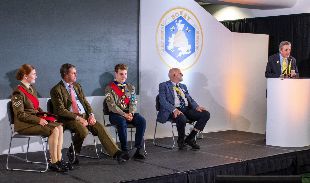
The Lord-Lieutenant of Surrey, Michael More-Molyneux, with two of his cadets, Jeremy Burbidge, and Bob Maurer at the 2025 National Honey Show Awards and Prize Giving. |
| |
At the next show, you are all invited to join us in celebrating the show’s King’s Award for Voluntary Service (KAVS). On Saturday 2nd May, the retiring Lord-Lieutenant of Surrey, Michael More-Molyneux presented the award to some of our show volunteers and committee at The Reigate Apiary in Surrey. |
|
|
|
|
Remember we invite teachers and group leaders to book for our schools’ day visit on Saturday 24th October 2026. George from the Thornes team compiled a video which gives an overview from 2024. |
Do get in touch with Fiona to book a Schools Day visit: gensec@honeyshow.co.uk, or Val: publicity@honeyshow.co.uk if you would like show leaflets, for instance if you are involved with organising the bee tent at your local county show. |
We look forward to seeing you at this year’s show:
National Honey Show Thursday 22nd to Saturday 24th October 2026 at Sandown Park Racecourse, Esher, Surrey, KT10 9RT, UK. |
|
|
|
|
|
|
|
World Bee Day – 20 May 2026 |
World Bee Day 2026 is an opportunity to celebrate and reflect on the deep, evolving relationship between people and bees, a connection that has supported livelihoods, biodiversity and food systems for thousands of years. |
|
|
|
|
This year’s theme recognises the value of blending traditional beekeeping knowledge with modern innovation, and highlights the importance of inclusive, community-led partnerships in building a sustainable future for both pollinators and people. |
For Bees for Development, World Bee Day is more than a moment of celebration. It is a chance to champion beekeeping as a practical, proven pathway out of poverty, one that strengthens resilience, protects ecosystems, and empowers communities around the world. |
To learn more about the work of Bees for Development please take a look HERE |
| |
|
|
| |
|
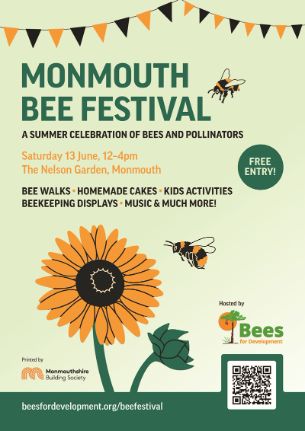
Monmouth Bee Festival -13 June, 2026 |
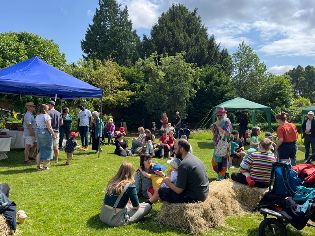
Ever fancied a visit to Monmouth? Join Bees for Development on Saturday 13 June for the Monmouth Bee Festival 2026, a vibrant community celebration of bees, pollinators and the vital role they play in our lives. |
|
|
|
|
Taking place in the beautiful Nelson Garden in Monmouth from 12pm to 4pm, this free, family friendly event promises something for everyone. There will be face painting, seed ball making, beekeeping displays, homemade cakes and refreshments and much more, all set to the sound of live music. |
Visit our website HERE for more details. |
|
|
|
| |
|
Introducing the next generation of beekeepers |
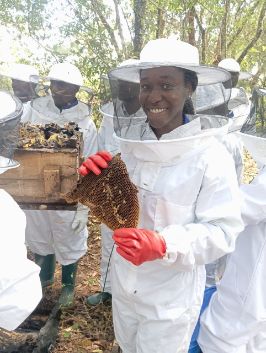
Bees for Development has successfully completed the second round of the Mzuzu University Apiculture Course, supporting more than fifty students to deepen their understanding of honey bees and the beekeeping sector in Malawi. |
Through this course, students are building the knowledge and skills needed to strengthen sustainable livelihoods and support the future of beekeeping in the country. |
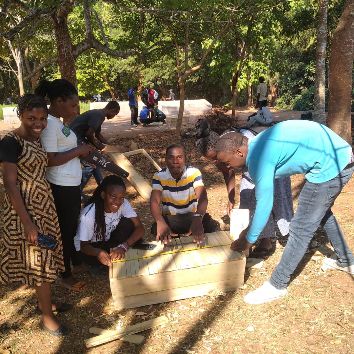
We emphasised practical training throughout the course with students learning to build their own hives, manage apiaries, harvest and process honey, and make value added products. Read the full blog post HERE. |
|
|
|
| |
| |
|
|
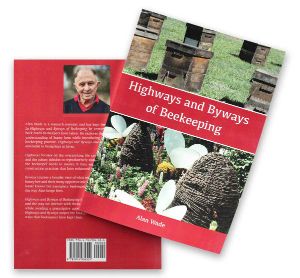
Highways and Byways of Beekeeping
by Alan Wade |
|
|
|
|
“Based on over 40 years of beekeeping in Australia, Wade brings many insights on commercial and practical bee management in the era preceding the arrival of varroa in Australia.. Careful to cite his sources, there is an extensive bibliography of some 500 scientific papers, books and articles." |
Northern Bee Books (1st ed. 2023)
Paperback
448 Pages
£36 |
Reviewed by Carreck, N.L., Quigley, A.S. (2021) |
| |
|
|
|
Alan Wade is a retired research scientist, based in Canberra, Australia, who has many years’ experience of giving lectures and writing articles. He is knowledgeable, and this book, much like David Aston and Sally Bucknall’s recent book (Carreck & Quigley, 2021) is a collection of a lifetime’s experiences, knowledge, insights, and musings. |
Based on over 40 years of beekeeping in Australia, Wade brings many insights on commercial and practical bee management in the era preceding the arrival of varroa in Australia. The Australian varroa story continues to run in the news, twelve months after its arrival, and despite attempts to eliminate it using a “scorched earth” policy (see Beyond the Veil elsewhere), has now been declared as established, so will change Australian beekeeping forever, but this book is still well worth reading. |
The first section “Highways” is devoted to beekeeping, starting with queens and swarming behaviour before addressing practical beekeeping. Wade is particularly keen on “two queen” systems, and discusses several variations on the theme. “Byways” has two sections, the first covering the social aspects of different species of bees, including the other Apis species and the other Hymenoptera, through pests and diseases - including mites and the small hive beetle. He closes out Byways with pen portraits of five beekeepers whom he feels have been neglected. |
For a book of this size and depth we were disappointed there was no index, so it is not easy to navigate. For example, whilst the contents direct the reader to the section on direct requeening, the reader needs to “know” (say) that the Demaree method is on page 107. However, the font is of a good size, and for a book with so much information in it, is physically easy to read. There are good colour photographs and helpful diagrams illustrating the various techniques he explains, and the book is peppered with apposite quotes. |
Careful to cite his sources, there is an extensive bibliography of some 500 scientific papers, books and articles, but it has its limitations, as some texts are referred to several times and the references provided often crossrefer to an earlier citation and consequently the source articles are not that easy to identify as the reader scans through many pages of references. Perhaps an alphabetical list would have been easier to navigate. This confusing situation arose almost certainly because the book contains many articles pulled together, from various sources, and it is a shame that time was not taken to resolve this point. |
This is very much a book to dip into, rather than read through from start to finish, and would suit more experienced beekeepers, and those looking to extend their knowledge, but it repays careful attention, for it contains many ideas, names and pieces of equipment that we have not previously come across elsewhere. |
|
|
|
|
|
|
|
Tuesday - Saturday 9am - 4pm |
|
|
|
|
Monday - Friday 9am - 5pm |
|
|
|
|
Monday - Saturday 10am - 5pm |
|
|
|
|
Monday - Saturday 10am - 5pm |
|
|
|
|
Monday - Friday 9am - 5:30pm |
|
|
|
|
|
|
| |
|
Thornes of Scotland: Sale Days
|
Newburgh Industrial Estate, Cupar Road, Newburgh, Fife, KY14 6HA |
|
|
|
| |
|
Thornes of Windsor: Sale Day
|
Oakley Green Farm, Oakley Green, Windsor, Berkshire, SL4 4PZ |
|
|
|
| |
|
Thornes of Stockbridge: Sale Day
|
Chilbolton Down Farm, Chilbolton Down, Stockbridge, SO20 6BU |
|
|
|
| |
|
Thornes of Devon: Sale Day
|
Quince Honey Farm, Aller Cross, South Molton, Devon, EX36 3RD |
|
|
|
| |
|
Beehive Business Park, Rand, Lincolnshire, LN8 5NJ |
|
|
|
| |
|
|
|