|
|
Our annual Sale Days are approaching! We will be starting with our Scotland branch, Friday 7th & Saturday 8th August. Click below to order now for collection from the Sale Days. |
Friday 7th & Saturday 8th August |
Plus, you can still collect your sale orders: Monday 7th - Wednesday 9th |
Plus, you can still collect your sale orders: Monday 21st - Wednesday 23rd |
Plus, you can still collect your sale orders: Monday 28th - Wednesday 30th |
Place your order now for collection from the Sale Days. |
Don’t miss the Rand Sale and Open Day in Lincolnshire, our biggest sale event of the year! Discover fantastic savings on thirds, seconds, one-off items, shop-soiled equipment and many other bargains. This year’s sale area will be bigger than ever. |
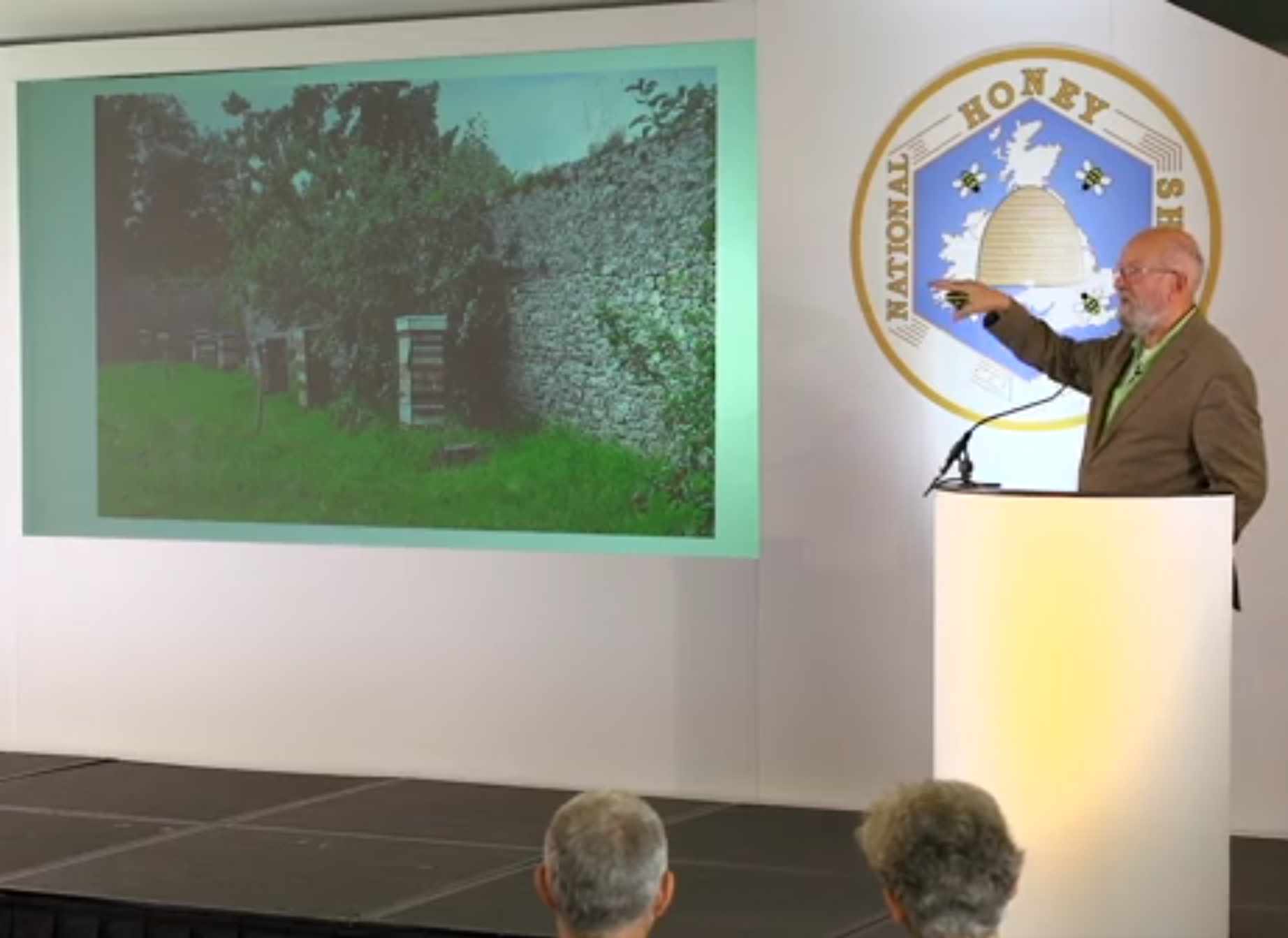
While you’re here, enjoy the on-site restaurant, see two observation hives in action, visit the museum, take a factory tour, and hear a talk by Tony Jefferson on "How to Stop Beekeeping Getting Complicated." It’s a great day out for beekeepers and visitors alike, so be sure to put the date in your diary! |
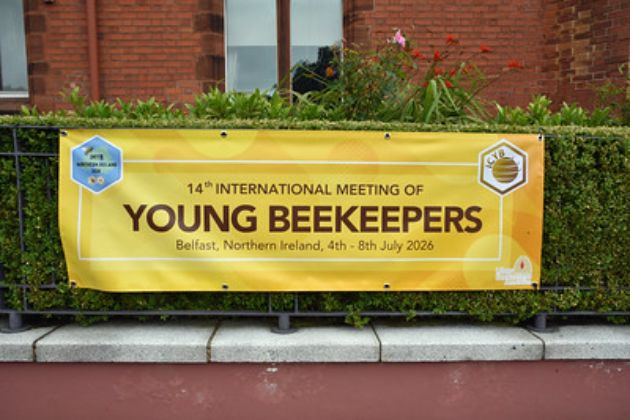
International Meeting of Young Beekeepers |
|
|
|
|
The 14th International Meeting of Young Beekeepers (IMYB) took place in Belfast, Northern Ireland, from 4th - 8th July, bringing together around 75 competitors, aged 12–18, representing 27 countries. |
We were delighted to support the event by providing equipment and essential beekeeping gear to support beekeeping education initiatives for young beekeepers. As longstanding advocates of British beekeeping education, we are also proud to sponsor our own regional initiatives, supporting young beekeepers through the Leslie Thorne Award. |
Keep an eye out for our upcoming blog post, where we'll take a closer look at the 14th International Meeting of Young Beekeepers (IMYB). |
|
|
|
|
|
|
|
Introductory offer – £450 (save £50) |
Improve your honey packaging process with the new SG Filling Machine, a high-performance filling solution engineered for fast, accurate, and hygienic honey filling. Designed for commercial honey producers, as well as the hobbyist beekeeper, this machine delivers consistent fill volumes while preserving product quality. |
Suitable for all types of runny honey, and for honey in environments with a temperature above 15℃. The flow rate and filling speed depends on the viscosity of the liquid and the ambient temperature; lower viscosity honey flows faster, while higher viscosity fills more slowly. |
Built to meet strict food hygiene standards, the SG Filling Machine is easy to clean and maintain. Its advanced filling system is specifically engineered for thick, sticky liquids such as honey, minimising drips, foaming, and waste. User-friendly controls and adjustable filling weights allow operators to switch between different container sizes quickly, helping to maximise productivity and reduce downtime. |
The machine comes pre-set with 4 weights, but you can also create and save your own custom fill weights to suit your bespoke production needs. |
Change between manual and automatic operating modes for complete flexibility. In automatic mode, the machine detects each empty jar placed on the scale and begins filling automatically, no button pressing required. |
Suitable for filling glass jars, plastic bottles, squeeze bottles, mini jars, and other containers. The SG Filling Machine offers reliable performance for both small-scale and high-volume production lines. |
|
|
|
|
Introductory offer: £450 (save £50) |
| |
Key Features
- High-precision filling for accurate, consistent weights
- Specifically designed for honey
- Food-grade construction
- Anti-drip filling nozzle for clean operation
- Simple, easy to use control panel
- Compatible with a wide range of containers
- Automatic and Manual operating modes
- Adjustable fill weights, with programmable pre-sets
- Built in counter to track production (counts number of jars filled)
- Low maintenance and easy to clean
|
|
|
|
|
Whether you're expanding your honey production or upgrading your packaging line, our SG Filling Machine delivers the accuracy, efficiency, and reliability needed to maximise output while maintaining the highest product quality. |
Watch our latest setup and demonstration videos on our YouTube channel, to see the SG Filling Machine in action. Click on the link below. |
We will also be providing a demonstration of the SG Filling Machine at our Rand Sale & Open Day (Lincolnshire), on Saturday 10th October. |
|
|
|
| |
|
|
Currently on offer:
2 dose was £20 now £16
10 dose was £70 now £56 |
|
|
|
|
Varroa remains one of the greatest threats to honeybee colonies. Left untreated, these parasitic mites weaken colonies, spread viruses, reduce honey production, and can ultimately lead to colony collapse. Effective varroa management is therefore an essential part of modern beekeeping. |
Among the many treatments available, Formic Pro has earned a reputation as one of the most effective products for controlling varroa mites, particularly because it can reach mites beneath capped brood. However, it is also one of the treatments that requires the greatest attention to timing, weather conditions, and application technique. |
The active ingredient in Formic Pro mite treatment strips is formic acid. The treatment is supplied as semi-rigid gel strips covered in biodegradable laminated paper. The paper wrap acts as a wick to control the release of the formic acid vapours inside the hive, over a defined treatment period. |
| |
|
|
|
Formic acid is an organic acid that is commonly found in many plants and is a natural component of honey. |
Unlike many other varroa treatments that only kill mites attached to adult bees, known as phoretic mites, the vapour produced by Formic Pro penetrates the wax cappings of sealed brood cells. |
|
|
|
|
As formic acid evaporates, the vapour spreads throughout the hive. The concentration is high enough to kill varroa mites while remaining tolerable for a healthy honeybee colony, when used according to the manufacturer's instructions. |
Because the vapour reaches capped brood, Formic Pro attacks mites at multiple stages of their lifecycle: |
- Mites on adult bees
- Mites reproducing inside sealed brood cells
- Newly emerging mites leaving brood cells
|
|
|
|
|
This makes it particularly valuable during periods of heavy brood production, when a large proportion of the mite population is hidden beneath wax cappings. |
|
|
|
|
Product labels and instructions should always be followed carefully, but the general application process is as follows. |
Before treatment:
- Ensure the colony is strong enough for treatment (typically covering at least six frames of bees).
- Confirm daytime temperatures fall within the approved range, generally 10°C - 29.5°C.
- Formic Pro will have the highest impact on varroa when the outdoor temperature range is between 15°C – 25°C.
- Formic Pro should not be used when outdoor temperatures exceed 30°C.
- It is important to ensure the colony is well ventilated. Fully open the hive entrance to maximise ventilation. This may impact the ability to control wasps while keeping the hive entrance fully open during treatment. You can use a screened barrier that permits maximum airflow while blocking wasps. Standard entrance reducers or solid robbing screens should not be used because they restrict the necessary ventilation and cause formic acid buildup.
- You should not use internal or in-hive feeding (such as sugar syrup or pollen patties) while treating your colonies with Formic Pro. It is therefore important to ensure your colonies are well fed and have adequate food stores before you begin the treatment period.
- Wear appropriate personal protective equipment, including acid-resistant gloves and eye protection, as formic acid is corrosive.
- Supers must not be present or must be removed before treatment.
- Follow the treatment instructions carefully (supplied with the product) before application.
|
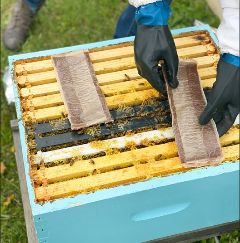
Application involves placing the strips across the brood nest as directed on the product label. The strips should be placed flat across the brood frames from opposite sides, covering the majority of the brood nest between the strips. Two strips should be used whether using single or double brood. If using double brood, then the strips should go on the top of the frames in the bottom box. The treatment is then left in the hive for the specified period (7 days) before removal. During treatment it is normal to observe:
- Increased bearding at the hive entrance
- Temporary interruption of brood rearing
- Some dead bees outside the hive
- A noticeable odour of formic acid
These effects usually resolve after treatment ends. |
|
|
|
|
Formic Pro is one of the few varroa treatments that, following treatment, can be disposed of by adding to your compost heap. |
Kills mites inside capped brood |
This is Formic Pro's greatest advantage. Most varroa treatments only kill mites on adult bees but a large percentage of mites are reproducing inside sealed brood during spring and summer, Formic Pro reaches these mites, helping reduce overall mite populations more quickly. |
Reduced risk of resistance |
Because Formic Pro relies on naturally occurring formic acid rather than a synthetic insecticide, there is currently no widespread evidence of varroa populations developing resistance to it. This makes it a valuable tool within an Integrated Pest Management (IPM) plan. |
Organic active ingredient |
Formic acid occurs naturally in honey, making Formic Pro an attractive option for beekeepers seeking alternatives to synthetic treatments. |
Compared with products that remain in the hive for several weeks, Formic Pro treatment is relatively quick, allowing colonies to return to normal management sooner. |
Effective during presence of brood |
Many treatments work best when little or no brood is present. Formic Pro remains effective even when colonies are actively raising brood because it targets mites beneath the wax cappings. |
Despite its advantages, Formic Pro is not suitable for every situation. |
Temperature is one of the most important factors affecting success. If conditions become too hot during treatment, colonies may experience excessive stress, brood loss or, in some cases, queen loss. Conversely, cooler temperatures may reduce effectiveness. Always follow the temperature limits on the product label. |
Formic acid is a powerful treatment. During application it is common to see:
- Temporary brood interruption
- Increased bee mortality
- Queen reduction in egg laying
- Heavy bearding
Strong colonies generally recover well, but weaker colonies may struggle. |
Risk of Supersedure or Queen Loss |
When using Formic Pro, there is a risk of causing queen supersedure or queen loss. The formic acid vapours stress the colony and can subtly injure, weaken or disrupt the egg laying of the queen. If the queen’s pheromones are diminished by the treatment, worker bees may sense that the queen is compromised and may decide to kill or replace her (supersedure). The following factors increase the risk:
- Applying Formic Pro during periods of high temperatures (exceeding 29.5°C).
- Lack of airflow and inadequate ventilation traps concentrated vapours inside the hive.
- If the colony is small or weak it will be more vulnerable to chemical stress.
- Causing disturbance by opening the hive during the sensitive initial treatment window can trigger bees to ball and reject the queen.
|
Formic acid is highly corrosive and can cause burns to skin and eyes, while its vapours can irritate the respiratory system. Appropriate personal protective equipment and careful handling are essential whenever the product is used, always follow the instructions supplied with the product. |
Tarnish and Rust of Galvanised Metals |
Galvanised hive components, like the roof, or excluders, may tarnish or rust when using Formic Pro. The fumes from the formic acid will corrode galvanised metal as they leave the hive, via cone escapes or roof vents. Once the galvanised components start to tarnish or deteriorate, rust can quickly form and spread along the exposed edges of the metal. To prevent this, ensure the lower entrance is fully open and unobstructed to help the fumes dissipate safely rather than concentrating against metal hardware. |
Not suitable for weak colonies |
Small nucleus colonies or weakened colonies may not tolerate treatment well. Manufacturers recommend treating only colonies that meet the minimum strength requirements. |
How Formic Pro Compares with Other Varroa Treatments |
The National Bee Unit have an advisory leaflet, ‘Managing Varroa’ which features a table comparing Varroacides authorised for use in the UK. No single treatment is ideal for every colony or every season. Many beekeepers rotate between different products to minimise resistance and tailor treatments to colony conditions. |
To get the best results from Formic Pro:
- Monitor mite levels before deciding to treat.
- Treat only within the recommended temperature range.
- Ensure colonies have adequate ventilation.
- Follow label instructions exactly.
- Monitor colonies after treatment, paying particular attention to queen status.
- Rotate treatment methods as part of an integrated varroa management strategy rather than relying on one product year after year.
|
Formic Pro is an excellent treatment for varroa control because it tackles mites where they reproduce, inside sealed brood cells. However, its effectiveness comes with responsibilities. Correct timing, suitable weather conditions, strong colonies, and careful handling are all essential for success. Used appropriately, Formic Pro can significantly reduce mite populations and help maintain healthy, productive colonies. Used carelessly, it can place unnecessary stress on bees and increase the risk of queen or brood loss. |
For beekeepers looking to build an effective Integrated Pest Management (IPM) Plan, Formic Pro remains an excellent treatment, provided it is used with the respect that all treatments require. |
|
|
|
|
|
|
| |
|
July has been a good month for us. The bees are on a strong flow and building stores nicely – it's excellent to see them working well, especially when we think ahead to winter. It always sounds such a way off when we start talking about winter in July and in some ways it is, especially this year – we keep forgetting how early on we've had all this hot weather! But it is always good to keep in mind that in order to get them through the winter, we need to prepare well in advance. |
The bees have really been doing well this month. The weather's been hot and dry but there has still been plenty of forage about, so they've been making the most of it. The frames are filling up with honey, and we're confident about their stores heading into autumn. We've been checking all our colonies to make sure they're queen right and have good temperaments – it's important to stay on top of this as we go into the later summer months. |
|
|
|
|
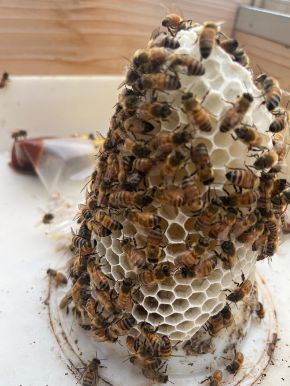
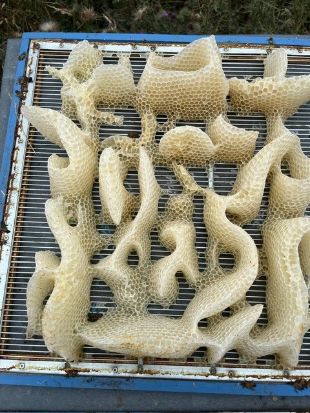
We've had a good reminder this month – bees will build comb absolutely anywhere if you let them. One piece of equipment went on incorrectly at one of our apiaries, and the bees filled every gap with brace comb. It's a useful lesson to double-check everything's positioned properly before you move on. |
Here you can see one of the feeders, which is interesting too. The bees have built brace comb right over the hole and started storing food in there as well, showing just how determined they are to use every bit of available space. |
Wasps are starting to become a real issue in the apiary this month, so we've been putting in wasp-outs across all the hives to hopefully deter any wasps looking like they want to sneak in. The stronger we can keep the colonies, the better their chance of survival. |
|
|
|
|
We've also been making sure the colonies have enough room and trying to equalize the sizes of the hives. We want every colony to be roughly the same size, using the same equipment so we head into winter knowing what is out in the apiary and what is in each hive. It's standard July work – checking progress, adding boxes when needed, and staying on top of things |
As we move forward into August, we will start thinking about autumn prep, which will include some form of varroa treatment. The flow should continue for a while yet, so we'll make the most of it for now. |
| |
|
|
|
|
|
|
The next lecture video from 2025, to be released Friday 7th August at 5.15pm UK local time, will be Jim Ryan’s ‘Moving up from small scale beekeeping’. Jim started helping his grandfather with his bees when eight years old. He later did a beginners’ course, qualified as a lecturer, and has lectured to beekeepers all over the UK. Over the years he has kept up to 75 colonies, but has now reduced to about 30. For ten years he wrote a monthly column called ‘Hints to Beginners’ in An Beachaire (The Irish Beekeeper) and later edited the magazine. This lecture outlines steps from hobbyist to small bee farmer, covering the additional work, suitable out apiaries, swarm control, increase, and queen rearing. |
|
|
|
|
During last year’s show Jim chatted with Val about his experiences, the importance of producing drawn comb; and scaling up which you can view here. |
Speakers for this year’s National Honey Show are Professor Keith Delaplane, Dr Eoghan Mac Giolla Coda, Paul Verrier, Tony Jefferson, Paul Boyle, Alice Pinto, Paul Honigmann, and Stephen McGrath. More information to follow, and on our website. |
This year The National Honey Show will be hosting honey tasting, mainly themed to the show entry classes, to be held in the Champagne Bar. |
| |
Jim Ryan on ‘Moving up from small scale beekeeping’’ |
|
|
|
|
The National Honey Show‘s online system for logging show entries will open online in early August. You can contact Jill, our friendly, helpful entries sec if you need assistance. Classes with our King’s Award for Voluntary Service theme are: Decorative Class 31; a Decorative Design in Honeycomb built by bees Class 118; and the Decorated Honey Cake Class 181. And of course, any other appropriate class could be given a King’s Award theme. |
The final date for registering (but not actually sending until instructed) entries for early classes: eg essays, videos, microscope slides and photographs is 7th September 2026; entry forms for junior classes by 28th September; and for all other entries is 5th October 2026. All the details for delivering and staging are in the Schedule, available from our website. |
We love to encourage younger enthusiasts to take an interest in bees and the show. For the last three years we have had a successful programme for school visits. We invite teachers and group leaders to think about and book a schools’ day visit on the Saturday of the show. George from the Thornes team compiled a video which gives an overview from 2024. Do get in touch with Fiona to discuss and book a future Schools Day visit: gensec@honeyshow.co.uk. Or contact Val: publicity@honeyshow.co.uk if you would like show leaflets, for instance if you are involved with organising the bee tent at your local county show. |
You are welcome to join us in person in making the show a success. Stewarding at the show covers many different roles from helping to set up/break down, assisting judges, helping at lectures, the sales desk, the honey tasting or the information desk. It is rewarding, and we welcome you as part of the team. If you can spare half a day, or even a couple of hours do contact Bridget: steward@honeyshow.co.uk |
We look forward to seeing you at this year’s show:
National Honey Show Thursday 22nd to Saturday 24th October 2026 at Sandown Park Racecourse, Esher, Surrey, KT10 9RT, UK. www.honeyshow.co.uk |
|
|
|
|
|
|
|
Help Train Tomorrow's Beekeeping Leaders |
|
|
|
|
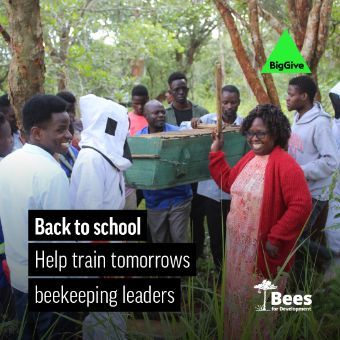
This September, support the next generation of beekeeping leaders through our matched regular giving campaign. |
Every year, students at Mzuzu University in Malawi and Makerere University in Uganda discover that beekeeping is about far more than honey. Through specialist training, practical sessions and field visits, they gain the skills to improve livelihoods, protect biodiversity and create lasting opportunities for their communities. |
From 1–29 September, when you start a regular gift, your donations will be matched, helping to train even more students to become the beekeeping leaders of tomorrow. If you prefer, you can also make a one-off donation to support this vital work. |
To receive campaign updates and find out how you can get involved, sign up to the Bees for Development newsletter here |
| |
|
|
|
News from Zimbabwe and our Bees for Developments work with Bees for Trees. |
|
|
|
|
Meet The Drones Academy FC, a community football team in Zimbabwe where every goal is celebrated with a buzzing huddle inspired by bees. |
The team was formed to give young men a positive alternative to drug and substance misuse. Made up of the sons of women involved in our beekeeping work, it's entirely self-funded, with players and supporters taking on local jobs to keep the club running. |
Now, they're taking their connection to bees one step further. |
The players and supporters will soon receive beekeeping training and establish two community apiaries on the edge of a nearby forest. By selling honey and other hive products, they'll create new income opportunities while helping to protect and conserve the forest they depend on. |
It's a powerful example of how beekeeping can bring people together, create sustainable livelihoods and protect nature for generations to come. |
Sometimes, the biggest wins happen long after the final whistle! |
If you would like to support this work please donate here |
| |
|
|
|
Biodiversity in Action: Beekeepers Protect Forests, Bees and Communities |
When people think about beekeeping, they often think about honey. But for the communities we work with, beekeeping is also about protecting the natural environment on which bees and people depend. |
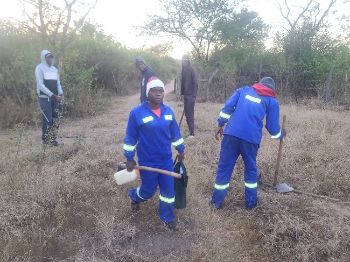
Just last month one of our project areas faced a serious threat when a large wildfire spread rapidly in strong winds. Thanks to fireguards created by the community and the swift response of our local team using simple but effective firefighting techniques, the fire was contained before it could reach the forest or nearby apiaries. No trees were lost, and no hives were damaged. |
This is a powerful example of how sustainable beekeeping supports biodiversity. When communities earn an income from healthy forests, they have a strong incentive to protect them. Fireguards, forest conservation and beekeeping work hand in hand, helping to safeguard wildlife, protect pollinator habitats and build resilience against the growing impacts of climate change. |
At Bees for Development, we know that bees are about so much more than bees. By supporting sustainable beekeeping, you're helping communities conserve biodiversity, protect precious ecosystems and create a future where both people and nature can thrive. |
To learn more about the work of Bees for Development visit here |
|
|
|
|
|
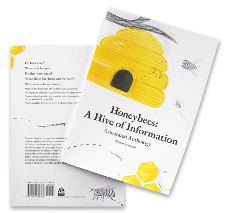
Honeybees: A Hive of Information (Annotated anthology)
by Graham Kingham |
|
|
|
|
Curious, informative and wonderfully varied, Honeybees: A Hive of Information is exactly what its title promises. With bite-sized articles spanning science, history, language and beekeeping, Graham Kingham offers an entertaining journey through the remarkable world of the honey bee. Accessible, thought-provoking and full of unexpected discoveries, it is a rewarding read whatever your level of experience. |
Northern Bee Books (1st ed. 2020) Softback, 144 Pages, £18.95 |
| |
|
|
|
Reviewed by Carol Hrusovszky. The Beekeepers Quarterly 145, September 2021 |
Welcome to a collection of articles devoted to our favourite insect, the honey bee. Author Graham Kingham has put together "Honeybees: A Hive of Information," a book which covers a wide range of topics, all in small bites so we can gain information on specific subjects in just minutes. It's like taking mini-classes on in-depth areas of beekeeping that we may not otherwise delve into. I would think everyone, including the most experienced beekeeper, will find new information in this book. Seriously, no matter your level of bee keeping knowledge, haven't you occasionally wondered if bees actually do have knees? Luckily, this book will tell you. |
Kingham provides us with his knowledge and opinions gathered as a hobby beekeeper in Devon, England. He has a microscope, so expect some science - and since many articles did include scientific names, I found it very helpful that there was even an article explaining how those terms came to be. I, being a typical human, enjoyed the articles that most agreed with my opinions, but· found that those that had different viewpoints were well worth reading, too. Respectfully written, they provided me with plenty of new ideas to ponder. None of the articles were judgmental or overly opinionated, but instead were in depth and interesting. |
As we all know, all knowledge gained is priceless. After reading the book, I am now aware that drone congregation areas might be determined by local magnetic anomalies, and that drones of different races fly at different heights. If drone data isn't your thing, maybe you will instead enjoy some etymology. According to the Oxford English Dictionary, there's a record of the words "honey bee" being used as early as 1566. Originating from the Old Norse "hunung," which in Old German was "honing," it forwarded into the Old English hunig.” Eventually it just turned into the easy to pronounce "honey." |
If your preference is history, however, you will find satisfaction in knowing that Napoleon used bees in his emblem during his reign. He felt they were a symbol of resurrection, immortality, and royal authority. Whether you consider him a good guy or bad, we can all agree to give him points for being smart enough to recognize the importance of the bee. |
Of course, if a book is too easy to read, it can become boring. Thankfully the author threw in some facts to exercise our gray matter. Most of us don't walk around throwing out terms like "binominal nomenclature," but after reading this book, you will be able to easily use it in conversation - you know, just in case it should ever come up. I can tell you that it is the system of using two names to create a scientific name. For example Apis mellifera denotes the genus (Apis) and the species (mellifera) of the honey bee. The articles with simple explanations like these are informative without being too hard to mentally digest. |
Sometimes a book builds information from start to finish, requiring a person to stick with it from page to page if they wish to progress. This book instead allows the reader to browse through at their leisure, reading everything or only those pages that contain material that suits their taste. Each new section is a separate article, ranging from the simplicity of bee-related terminology (i.e., busy bee) to the scientifically advanced nano Tesla (a variation in magnetism). Overall, it was enjoyable to read while learning so many different aspects concerning the wideranging world of honey bees. I found it to be, you know - a hive of information. |
|
|
|
|
|
|
|
Tuesday - Saturday 9am - 4pm |
|
|
|
|
Monday - Friday 9am - 5pm |
|
|
|
|
Monday - Saturday 10am - 5pm |
|
|
|
|
Monday - Saturday 10am - 5pm |
|
|
|
|
Monday - Friday 9am - 5:30pm |
|
|
|
|
|
|
| |
|
Thornes of Scotland: Sale Days
|
Newburgh Industrial Estate, Cupar Road, Newburgh, Fife, KY14 6HA |
|
|
|
| |
|
Thornes of Windsor: Sale Day
|
Oakley Green Farm, Oakley Green, Windsor, Berkshire, SL4 4PZ |
|
|
|
| |
|
Thornes of Stockbridge: Sale Day
|
Chilbolton Down Farm, Chilbolton Down, Stockbridge, SO20 6BU |
|
|
|
| |
|
Thornes of Devon: Sale Day
|
Quince Honey Farm, Aller Cross, South Molton, Devon, EX36 3RD |
|
|
|
| |
|
Beehive Business Park, Rand, Lincolnshire, LN8 5NJ |
|
|
|
| |
|
|
|